

Enterprise Release Management (ERM) is a set of end-to-end practices that enable large organizations to effectively manage software releases. ERM is uniquely designed for the challenges of multiple teams building and releasing software simultaneously. ERM establishes a framework that ensures organizations release software changes in a controlled and safe manner, minimizing disruption to normal business operations.
This blog post aims to provide a foundational understanding of ERM, its principles, and its role in facilitating efficient software delivery within large organizations.
What Is Enterprise Release Management?
Enterprise Release Management (ERM) is a framework for planning, building, testing, deploying, and monitoring software releases.
ERM is specifically designed for large organizations with many stakeholders and complex dependencies. ERM takes a holistic view of release management, coordinating a portfolio of releases across multiple teams and applications to minimize disruption and ensure everything works together smoothly.
While ERM implementations vary between organizations, ERM typically involves IT governance, configuration management, portfolio management, test-driven development, and project management. ERM often incorporates other frameworks such as Scaled Agile Framework (SAFe), DevOps, continuous delivery, and Release Trains.
By creating and maintaining an Enterprise Release Management strategy, companies can ensure that software teams create software that aligns with the business’s overall objectives, timelines, and resources.
Enterprise Release Management vs. Release Management
Release management is the general term for the process of building, testing, deploying, and monitoring a software release. It typically focuses on a single project or application within a development team.
Some key differences between ERM and release management:
- Scope: ERM considers not just individual projects, but the entire IT portfolio of a company.
- Coordination: ERM requires collaboration across multiple departments, like development, QA, operations, and business stakeholders.
- Risk Management: ERM places a stronger emphasis on risk management due to the complexity of coordinating multiple releases.
- Process: ERM typically relies more heavily on formal processes. For example, ERM typically involves a standardized change management process to ensure smooth transitions and minimize disruptions across the organization.
- Dependencies: ERM goes beyond individual projects, managing how releases rely on each other. It identifies and plans for these dependencies to ensure a smooth, sequenced rollout.

Key Enterprise Release Management Terms to Know
Before diving into the mechanics of Enterprise Release Management (ERM), it helps to align on the terminology that underpins how large organizations plan, govern, and execute software releases. The following concepts form the backbone of ERM and will come up repeatedly when discussing enterprise-scale release planning, coordination, and control.
1. Enterprise Release Portfolio
An enterprise release portfolio represents the full universe of software releases an organization is planning, actively developing, or preparing to deploy.
This includes releases across multiple products, platforms, teams, and business units, often spanning months or even years. Managing the portfolio at an enterprise level allows organizations to assess overall release capacity, identify overlaps or conflicts, and ensure that planned releases align with strategic priorities rather than evolving in isolation.
2. Enterprise Release Plan
An enterprise release plan is the consolidated roadmap that sequences and schedules releases across the organization. Unlike team-level release plans, it explicitly accounts for cross-team dependencies, shared infrastructure, regulatory constraints, and business milestones.
The goal of an enterprise release plan is to provide visibility into when changes will be delivered, how they relate to one another, and how release timing supports broader business objectives such as revenue targets, customer commitments, or compliance deadlines.
3. Enterprise Release Governance Strategy
The enterprise release governance strategy defines how release decisions are made, enforced, and measured across the organization. This includes policies for prioritization, approval workflows, risk management, escalation paths, and release readiness criteria.
A well-defined governance strategy creates consistency without unnecessary rigidity, ensuring that teams can move quickly while still operating within guardrails that protect system stability, security, and business continuity.
4. Enterprise Release Manager
The enterprise release manager is the role responsible for overseeing release activity across the organization as a whole. Rather than managing individual deployments, this role focuses on coordination, alignment, and decision-making at scale. Responsibilities typically include maintaining the enterprise release calendar, facilitating cross-team planning, resolving conflicts, enforcing governance practices, and ensuring that release execution remains aligned with business priorities.
5. Release Management Systems (RMS)
Release management systems are software platforms that support and automate enterprise release management processes.
These tools act as a central source of truth for release data, plans, dependencies, approvals, and execution status. In large organizations, an RMS helps replace spreadsheets, email threads, and ad hoc coordination with structured workflows, real-time visibility, and auditability across the entire release lifecycle.

Enterprise Release Management Roles and Responsibilities
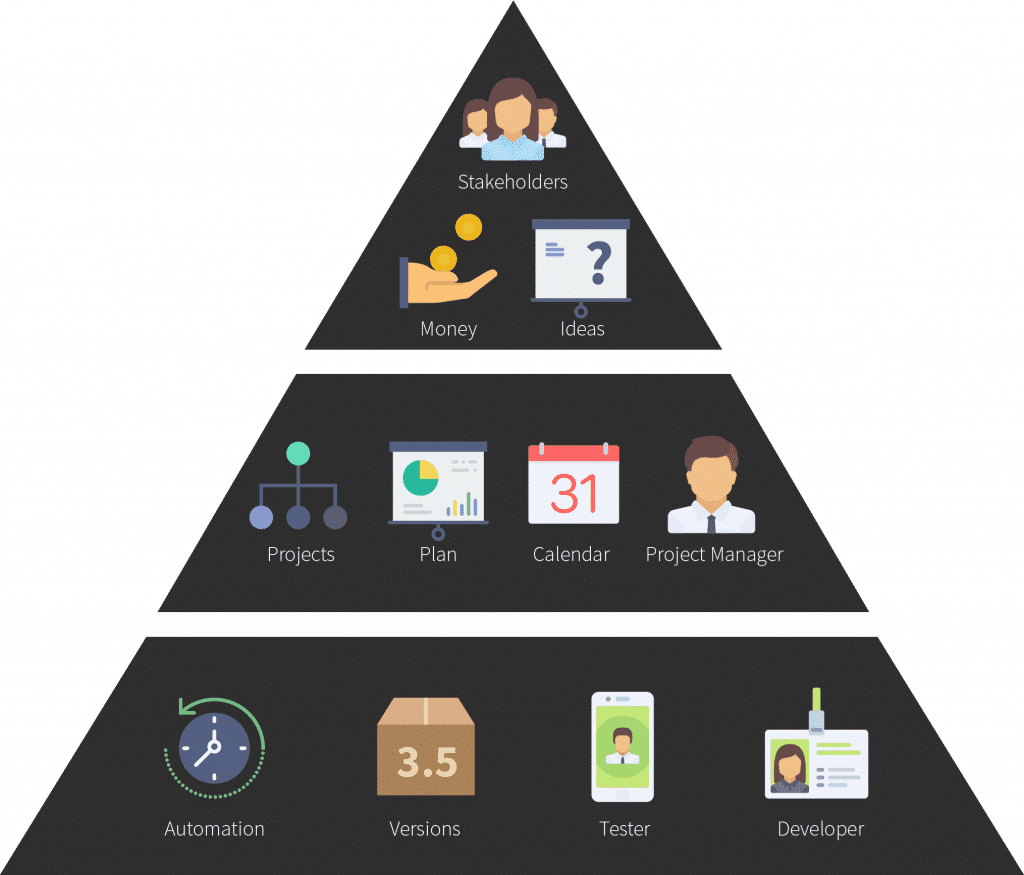
Enterprise Release Management (ERM) is not owned by a single team or function. It relies on coordinated collaboration across technical, operational, and business roles to ensure that releases are delivered safely, predictably, and in alignment with organizational goals. The following roles represent the core participants involved in enterprise-scale release management.
1. Enterprise Release Manager
The enterprise release manager is responsible for orchestrating release activity across teams, systems, and business units.
This role ensures that the right changes reach the right systems at the right time, while minimizing risk and disruption. Key responsibilities include maintaining the enterprise release calendar, coordinating cross-team dependencies, enforcing governance practices, and acting as the central point of accountability for release readiness and execution.
2. Business Stakeholders
Business stakeholders are individuals or groups with a vested interest in the outcomes of software releases, even though they are not directly involved in development or deployment. This group often includes executive leadership, finance, product strategy, and business analysts.
Their role in ERM is to define priorities, articulate business objectives, evaluate risk and impact, and ensure that release decisions align with broader organizational goals such as revenue growth, customer commitments, and regulatory requirements.
3. Software Development Teams
Software development teams are responsible for designing and building the features, fixes, and enhancements included in each release. These teams typically include developers, engineers, and technical leads, supported by project or delivery managers. Within ERM, development teams contribute estimates, identify dependencies, adhere to agreed timelines, and collaborate with testing and operations to ensure that deliverables are ready for release within enterprise constraints.
4. Test Teams
Test teams are accountable for validating that software meets quality, performance, and security standards before it is released. Their responsibilities include designing and executing functional, performance, integration, and security tests, as well as managing test environments that closely mirror production. In an enterprise context, test teams play a critical role in risk reduction by providing objective readiness signals that inform go or no-go release decisions.
5. IT Operations
IT operations teams prepare and maintain the production environment where releases are ultimately deployed.
This includes managing infrastructure, coordinating deployments, enforcing change controls, and ensuring system stability and availability. Roles within IT operations often include deployment managers, change managers, and configuration managers, all of whom collaborate closely with release management to execute releases in a controlled and auditable manner.
Types of Enterprise Release Management Tools
Ensuring a smooth and successful software release process requires managing a complex web of tasks and dependencies. Release Management Systems (RMS) such as Enov8’s Enterprise Release Manager are tools which offer functionalities to enhance collaboration, standardize and automate tasks, and improve release governance such as:
- Release Planning and Tracking: Tracking the entire release journey, from initial planning through testing and deployment. This centralized view allows for proactive identification of potential issues and facilitates progress monitoring.
- Deployment Planning and Execution: Creation of detailed deployment plans, outlining the steps involved in rolling out the new software version to production.
- Integration with Existing Processes: RMS tools can integrate seamlessly with existing IT Service Management (ITSM) processes, ensuring adherence to incident and change management procedures during releases.
- Version Tracking and Environment Management: RMS tools can track different software versions across various test environments, components, and microservices. Additionally, they can help identify discrepancies (test environment drift) between test environments and production, minimizing the risk of deployment failures.
- Orchestration of Workflows and Integration with External Tools: An RMS can act as a central hub, coordinating tasks and data flow between various tools within the development ecosystem. This includes alignment of deployment tools, ticketing systems, and CI/CD pipelines, fostering a more streamlined and automated release process.
By implementing a Release Management System, organizations can achieve greater control over the software release process. Improved visibility, standardized workflows, and automated tasks contribute to a more efficient and risk-mitigated development environment.
You can read more about specific release management tools here.
The Enterprise Release Management Cycle
The Enterprise Release Management (ERM) cycle is a structured, end-to-end process that governs how software changes move from business intent to production and beyond. While the exact implementation varies by organization, methodology, and scale, most ERM programs follow a recognizable lifecycle that balances planning, control, and execution.
Some enterprises operate on rapid, continuous cycles, while others manage release trains that span months or even years. Regardless of cadence, the following stages commonly appear in enterprise release management implementations.
1. Defining Business Objectives
The ERM cycle begins with clearly articulated business objectives. Senior stakeholders such as executives, product leaders, and strategists define the outcomes the organization aims to achieve, whether that is revenue growth, customer experience improvements, regulatory compliance, or operational efficiency.
These objectives provide the decision-making lens for all subsequent release planning and prioritization activities.
2. Creating the Enterprise Release Plan
Once business objectives are established, the enterprise release manager translates them into a high-level enterprise release plan. This plan outlines the overall release strategy, including targeted features, timelines, dependencies, and constraints across teams and systems. At this stage, the focus is on alignment and feasibility rather than detailed execution, ensuring that planned releases realistically support stated business goals.
3. Breaking Down Objectives into Work Streams
High-level objectives are then decomposed into concrete projects, initiatives, or work streams.
Project managers and release teams identify the specific pieces of work required to deliver the planned capabilities, clarifying ownership, scope, and interdependencies. This step bridges the gap between strategic intent and operational execution by turning goals into actionable plans.
4. Establishing Key Milestones
Key milestones are defined to track progress and maintain visibility throughout the release lifecycle. These milestones represent significant events or deliverables, such as design completion, testing readiness, or deployment windows. Milestones serve as coordination points across teams and help stakeholders assess whether the release is progressing as planned.
5. Establishing Release Gates
Release gates introduce formal checkpoints that work streams must pass before advancing to the next stage of the cycle. Each gate has defined entry and exit criteria, often related to quality, risk, compliance, or readiness. Gates provide a structured mechanism for controlling risk while still allowing teams to move forward when conditions are met.
6. Resource Management
Effective ERM requires proactive coordination of people, environments, and systems. Release teams, project managers, test environment managers, and system owners work together to identify required resources and ensure they are available when needed. This includes managing competing demands for shared environments, specialized expertise, and critical infrastructure.
7. Development and Testing
During this stage, features and changes are built, integrated, and validated. Activities typically include development, solution integration testing, user acceptance testing, and other quality assurance efforts.
In many enterprises, this work involves a mix of internal teams, packaged solutions, and outsourced vendors, which is why some ERM practitioners refer to this stage more broadly as “delivery” rather than purely development.
8. Building for Release
As the release approaches deployment, components are packaged and prepared as a deployable build. This stage emphasizes standardization and automation, including build processes, configuration management, and deployment scripts. A well-executed build-for-release stage reduces variability and increases confidence in repeatable, predictable deployments.
9. Deployment
Deployment involves releasing the software into production environments in a controlled manner. Enterprises often use phased rollouts, canary releases, or scheduled release windows to minimize risk and business disruption. Close coordination between release management and IT operations is critical to ensure deployments are executed safely and efficiently.
10. Monitoring and Post-Release Management
After deployment, the release is actively monitored for performance, stability, and user impact.
Feedback, incidents, and metrics are reviewed to identify issues that require remediation. This stage may include bug fixes, incremental improvements, or in extreme cases, rolling back the release. Monitoring closes the loop in the ERM cycle and feeds insights back into future planning.
The Benefits of Enterprise Release Management
Sticking to an Enterprise Release Management schedule can lead to a variety of benefits for an organization such as:
- Improved collaboration and communication: ERM fosters better communication and collaboration between different teams involved in the software development life cycle. This ensures everyone is on the same page and working toward a common goal.
- Increased customer satisfaction: By delivering high-quality software with fewer bugs and downtime, ERM helps improve customer satisfaction. Users receive a more reliable and consistent experience.
- Enhanced resource visibility and control: ERM provides a centralized view of all release activities, giving organizations greater control over the deployment process. This allows for better decision-making and faster troubleshooting if needed.
- Increased efficiency and productivity: ERM streamlines the software release process by establishing a defined workflow. This reduces redundancy and wasted time, allowing teams to deliver updates faster.
- Minimized risks and reduced downtime: ERM helps identify and address potential issues before they impact production. This proactive approach minimizes the risk of bugs and disruptions, leading to a more stable and reliable software environment.
With an optimized Enterprise Release Management system in place, software teams can increase output and avoid common pitfalls — like testing conflicts, quality issues, and security gaffes, among others.
Best Practices for Enterprise Release Management
Building on its core functionalities, this section explores best practices to optimize the ERM process and achieve successful software deployments.
- Plan and communicate: Coordinating complex project releases involves working backward from a target date. To achieve this, you need to map project dependencies and features, establish a timeline with buffers for testing and delays, and gain agreement from all teams involved.
- Manage dependencies: Increased project dependencies within a release heighten the risk of delays and last-minute bugs. Managing these dependencies involves tracking, reserving integration testing time, and ideally, promoting the creation of loosely coupled, independently testable project components. This allows for earlier integration testing and avoids the pitfalls of “big bang” integration at the last minute.
- Understand the importance of a pre-production environment: One of the ways to reduce release risks is to have a quality pre-production environment. Thorough testing in pre-production helps identify issues in the release that might be an expensive failure in production.
- Automate whenever possible: Automating steps such as building, testing, and deployment saves you time and reduces the opportunity for errors.
- Document anything you can’t automate: If a step is too hard to automate, document it. People who aren’t on the project team have to be able to build, test, and package a new version. Such documentation is essential if you ever need to deploy a security update quickly, for example.
- Deploy regularly: Regularly deploying in ERM minimizes risk by releasing smaller, more frequent updates. This fosters faster feedback, improved quality, and greater agility, allowing organizations to adapt and innovate quicker.
- Have standard operating procedures (SOPs): Creating SOPs for timelines, dependencies, and team coordination provides a reusable framework to streamline planning and reduce workload.
- Observe and improve: Observing deployments through monitoring helps isolate issues after releases, enabling targeted rollbacks or fixes while user data on feature usage provides valuable feedback for future releases.
Overcome Enterprise Release Management Challenges with Enov8
It’s very difficult to produce consistent and high-quality software without a central Enterprise Release Management platform in place. Companies often lose control over their production environment due to outdated and inefficient management policies.
This is exactly where Enov8 comes into play. Enov8’s Enterprise Release Management tool provides a central framework that enables you to orchestrate releases and measure progress each step of the way. With Enov8, you can help define and build an enterprise release schedule, onboard projects, identify system requirements, and deploy via DevOps automation.
At the same time, we can also help your organization boost agility by giving you more control and automation throughout your software development life cycle. This, in turn, leads to lower costs, accelerated project timelines, and a supercharged DevOps team.
Ready to unlock the full potential of Enterprise Release Management? Experience Enov8 in action by downloading our “Kick Start” edition today.