

Microservices have revolutionized the way modern software systems are designed and developed. Breaking down complex applications into smaller, independently deployable services brings numerous benefits in terms of scalability, flexibility, and maintainability.
However, as the number of microservices grows within an organization or a software ecosystem, managing and discovering them becomes a daunting task.
This is where a microservice catalog steps in, offering a solution to effectively organize, document, and utilize these distributed components.
In this article, we will delve into the concept of a microservice catalog, its significance, and how it aids developers and architects in harnessing the power of microservices efficiently. By the end, you’ll have a clear understanding of how a microservice catalog acts as a vital tool in the modern software development landscape.
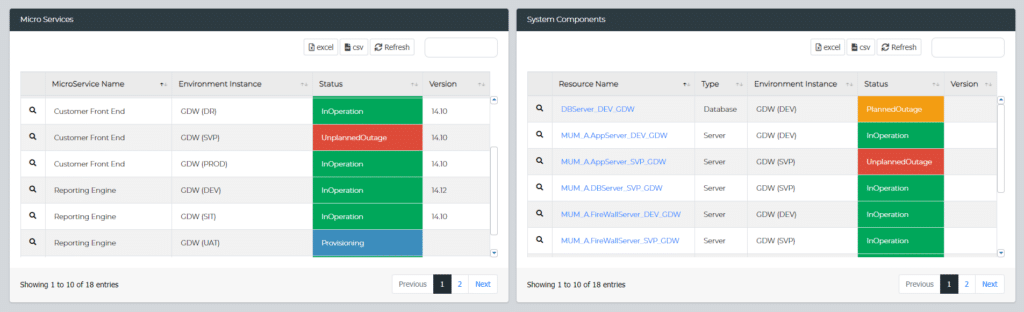
What Is a Microservice Catalog?
In the fast-paced world of microservices, where systems are composed of numerous loosely coupled components, having a comprehensive understanding of each microservice becomes crucial. This is where a microservice catalog proves invaluable.
A microservice catalog can be defined as a centralized repository or tool that houses a detailed listing of all available microservices within an organization or software ecosystem.
It serves as a single source of truth, providing developers, architects, and other stakeholders with the necessary information to discover, evaluate, and effectively utilize microservices.
Promoting Reusability
One of the primary benefits of a microservice catalog is its ability to promote reusability. Instead of reinventing the wheel for every new project, developers can browse the catalog and identify existing microservices that fulfill their requirements.
By reusing these services, development efforts are significantly reduced, leading to faster development cycles and improved productivity.
Promoting Cross-Team Collaboration
Collaboration is another advantage facilitated by a microservice catalog. When different teams or projects are working concurrently, it is essential to have a central repository where all microservices are documented and shared.
Developers can browse the catalog to gain insights into the available services, eliminating the need for repetitive development and fostering a culture of collaboration and knowledge sharing.

Core Components of a Microservice Catalog
The components included in a microservice catalog vary depending on the specific needs of an organization, but there are several common elements.
Firstly, each microservice in the catalog should have a descriptive name and a concise yet informative description of its purpose and functionality. This helps developers quickly understand the service’s capabilities and determine if it meets their requirements.
Additionally, comprehensive API documentation is a fundamental aspect of a microservice catalog. It should include details about the microservice’s endpoints, supported operations, request and response formats, and any authentication or authorization mechanisms required.
Clear and well-documented APIs enable developers to integrate the microservices seamlessly into their applications and ensure effective communication between components.
Another crucial aspect of a microservice catalog is managing dependencies. Microservices often rely on external resources, such as databases, other microservices, or third-party services.
The catalog should provide information about these dependencies, allowing developers to understand the interconnectedness of the services and ensure proper integration.
Furthermore, versioning is an essential consideration in a microservice catalog. As microservices evolve and improve over time, it is crucial to keep track of different versions and their compatibility.
Including versioning information, release notes, and backward compatibility guidelines in the catalog helps developers make informed decisions when selecting and updating microservices.
In summary, a microservice catalog acts as a centralized repository for organizing, documenting, and discovering microservices.
By promoting reusability, facilitating collaboration, and providing comprehensive information about microservices, it empowers developers and architects to make informed decisions, resulting in faster development cycles, reduced duplication of effort, and increased system scalability.
In the next section, we will explore the functionality and features of a microservice catalog in more detail.

Key Features of a Microservice Catalog
A microservice catalog offers a range of functionality and features that streamline the management and utilization of microservices within an organization or software ecosystem. Below are the key capabilities that enable efficient discovery, documentation, and integration of microservices.
1. Service Discovery
One of the primary functions of a microservice catalog is to enable developers and architects to discover and evaluate existing microservices. By providing a centralized repository of available services, teams can explore the catalog, search for specific functionalities, and identify suitable microservices that align with their project requirements.
This eliminates the need to reinvent or duplicate functionality, leading to time and resource savings.
2. Documentation and Interface Details
Comprehensive documentation plays a vital role in the effective utilization of microservices. A microservice catalog should provide detailed API documentation for each listed service, including endpoints, supported operations, request and response formats, and any required protocols or standards.
Clear documentation enables developers to understand how to interact with the microservice and integrate it seamlessly into their applications.
3. Versioning and Compatibility Management
Microservices evolve over time to address bugs, introduce new features, or improve performance. A microservice catalog should maintain versioning information for each service, along with release notes and backward compatibility guidelines.
This allows developers to make informed decisions about which version to use and understand the impact of updates on existing systems.
4. Dependency Mapping and Interconnections
Microservices often rely on databases, messaging systems, external APIs, or other microservices. A microservice catalog should document these dependencies and interconnections, helping teams understand how services relate to one another. Clear dependency mapping supports smoother integration, deployment planning, and impact analysis.
5. Search and Filtering Capabilities
As the number of services grows, discoverability becomes critical. A microservice catalog should offer robust search and filtering functionality, allowing users to locate services based on functionality, domain, tags, ownership, or supported technologies. Advanced filtering improves efficiency and reduces friction during development.
6. Feedback and Rating Mechanisms
To promote continuous improvement and collaboration, a microservice catalog can include feedback and rating features. Developers who use a service can share insights, highlight limitations, or recommend best practices. This creates an internal knowledge loop that strengthens service quality and encourages reuse.
Implementation and Maintenance
Implementing and maintaining a microservice catalog requires careful consideration of design, management, and tooling. In this section, we will explore some key aspects of implementing and maintaining a microservice catalog, including a potential solution called Enov8 Environment Manager.
1. Catalog Design
Designing an effective microservice catalog involves structuring the information in a logical and user-friendly manner. Consider organizing the catalog into categories or domains based on functional areas or business capabilities.
This helps developers easily navigate and discover relevant microservices. Additionally, an intuitive user interface with robust search and filtering capabilities enhances the usability and discoverability of the catalog.
2. Catalog Management
Regular maintenance is essential to keep the microservice catalog up to date and reliable. This includes updating service descriptions, API documentation, versioning information, and dependency details as changes occur.
It is important to establish processes and responsibilities for catalog maintenance to ensure accuracy and consistency. This may involve periodic reviews, collaboration with service owners, and incorporating feedback from users.
3. Integration and Tooling
Implementing a microservice catalog can be facilitated by utilizing specialized tools designed for this purpose. One such potential solution is Enov8 Environment Manager. Enov8 Environment Manager provides capabilities for managing microservices, including service discovery, dependency mapping, and documentation management.
It allows organizations to create a centralized repository of microservices, define their properties and relationships, and maintain up-to-date documentation. With Enov8 Environment Manager, developers can easily search, explore, and integrate microservices into their applications, streamlining the development process.
4. Automation and Continuous Integration/Deployment (CI/CD) Integration
Integrating the microservice catalog with automation and CI/CD pipelines further enhances its functionality. By incorporating the catalog into the CI/CD process, developers can automate the discovery and deployment of microservices, ensuring that the latest versions and dependencies are utilized.
This integration promotes consistency, reduces errors, and improves overall efficiency in the software development lifecycle.
5. Governance and Security
A microservice catalog should adhere to governance and security standards. Implement access controls to ensure that only authorized individuals can modify the catalog or access sensitive information.
Consider implementing authentication and authorization mechanisms to safeguard the catalog and the microservices it documents. Regular security audits and vulnerability assessments are important to maintain the integrity and security of the catalog.
Implementing and maintaining a microservice catalog requires a combination of proper design, effective management processes, and suitable tooling.
Enov8 Environment Manager is one potential solution that provides the necessary capabilities to establish and manage a comprehensive microservice catalog. However, organizations should evaluate various solutions available in the market and choose the one that aligns with their specific requirements and existing infrastructure.
By implementing a robust microservice catalog and leveraging tools like Enov8 Environment Manager, organizations can harness the power of microservices effectively, promote reusability, facilitate collaboration, and ensure the smooth integration of microservices into their software ecosystems.
Conclusion: Why It Matters
In the rapidly evolving world of microservices, where software systems are composed of numerous distributed components, a microservice catalog emerges as a crucial tool for effective management and utilization. Throughout this article, we have explored the concept of a microservice catalog, its significance, and the benefits it offers to developers and architects.
A microservice catalog acts as a centralized repository that empowers developers to discover, evaluate, and reuse existing microservices, leading to faster development cycles and improved productivity.
By providing comprehensive documentation, including API details, versioning information, and dependencies, the catalog ensures seamless integration and effective communication between microservices.
Implementing and maintaining a microservice catalog requires careful consideration of design, management processes, and suitable tooling.
Solutions like Enov8 Environment Manager provide capabilities for managing microservices, streamlining the catalog’s creation, and maintenance processes. Integration with automation and CI/CD pipelines further enhances the functionality of the catalog, enabling automated deployment and ensuring up-to-date usage of microservices.
A well-designed microservice catalog promotes collaboration, knowledge sharing, and reusability within organizations. It fosters a culture of efficient software development by eliminating duplicated efforts and facilitating the discovery of suitable microservices for various projects.
Furthermore, by adhering to governance and security standards, organizations can maintain the integrity and security of their microservice catalog.
As the landscape of microservices continues to evolve, the role of a microservice catalog will remain vital in managing complex software architectures effectively. Organizations that leverage the power of a microservice catalog can gain a competitive edge, delivering robust and scalable applications in an efficient and collaborative manner.
In conclusion, a microservice catalog is more than just a repository of services—it is a strategic asset that enables organizations to harness the full potential of microservices, promote reusability, and drive innovation in the world of modern software development.
By embracing the concept of a microservice catalog and implementing it with careful consideration, organizations can navigate the complexities of microservices and reap the benefits of a modular and scalable architecture.

Post Author
Jane Temov is an IT Environments Evangelist at Enov8, specializing in IT and Test Environment Management, Test Data Management, Data Security, Disaster Recovery, Release Management, Service Resilience, Configuration Management, DevOps, and Infrastructure/Cloud Migration. Jane is passionate about helping organizations optimize their IT environments for maximum efficiency.