
What is Enterprise IT Intelligence?
Business Intelligence for your IT Organization
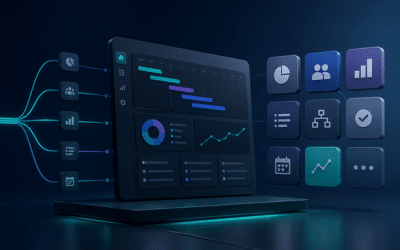
An umbrella platform which allows you to capture “holistic” real-time information across your IT Landscape (Environments, Data, Releases & Operations) with the intent of streamlined analysis, end-to-end insight, improved decision making and ultimately leading to better operations, orchestration and continual optimization.So, what is Enterprise IT Intelligence?
Well like its overarching parent, Business Intelligence, “Enterprise IT Intelligence” is fundamentally the embracement of certain activities and the capture of key information that supports the management of your IT Delivery Lifecycle and your IT Solutions. Key Activities:- Information Discovery
- Information Aggregation (Mapping / Relating Data)
- Reporting & Dashboarding (Historical & Real-Time)
- Event Alerting & Notification
- Information Consolidation i.e. Grouping e.g. By Team or System or Function
- Measurement e.g. Key Performance Indicators
- Prioritize (Identify Best Opportunities)
- Optimize (Collaboration / Act Upon the Data)
- Ensure commitment from senior stakeholders e.g. CIO, CFO & IT Executive Managers
- Identify benefits of implementing such a solution. Think Cost, Agility, Stability & Quality.
- Understand where valuable information resides and understand data gaps.
Key Information
The following is a selection of information that you might want to consider as part of implementing an Enterprise IT Intelligence solution: Your Data “Information Points”- Think Data-Sources, Databases, Grids, Structure, Content, PII Risks & Relationships
- Think People e.g. Data Subject Matter Experts, DBAs & Data Scientists
- Think Data Delivery Operations like ETL, Fabrication & Security Masking
- Think Lifecycle Lanes, Systems, Instances, Components, Interfaces & Relationships
- Think People e.g. Ent/Solution Architects, System Owners & Application Developers
- Think Application Delivery Operations like Design, Build, Release & Test
- Think Servers, Clusters (Swarms), Cloud & Network (Firewalls, Router & Load Balancers).
- Think People e.g. Infrastructure, Network & Cloud Architects & Engineers Think Infrastructure Delivery Operations like Provision, Configure & Decommission
- Project/Release Planning, Collaboration, Architecture Tools, Configuration Management, Version Control, Application Build, Continuous Integration, Packaging, Deployment, Infrastructure as Code, Data Integration/ETL, Test Management, Test Automation, Issue Tracking, IT Service Management, Logging & Monitoring.
Benefits of Enterprise IT Intelligence
The potential benefits of an Enterprise IT Intelligence platform include spotting problems early, trend behavioural analysis, accelerating and improving decision-making, optimizing internal IT processes, increasing operational efficiency (being agile at scale), driving IT cost optimization and gaining competitive advantage over your competition by providing better service and delivering solutions quicker.Learn More
If you want to learn more about implementing Enterprise IT Intelligence then speak to enov8 about our Ecosystem Solution. Enov8 EcoSystem is a complete platform that takes information from across the IT Spectrum and helps you better understand and manage your IT Fabric (Applications, Data, & Infrastructure), IT Operations & and Orchestrate them effectively.Relevant Articles
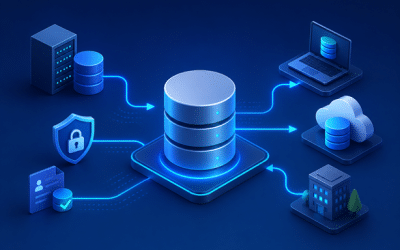
Database Provisioning: A Practical Guide
Development and testing teams need quick access to databases with the right structure, configuration, and data. Creating them manually can slow teams down, consume storage, and put sensitive production data at risk. Database provisioning helps teams deliver the...
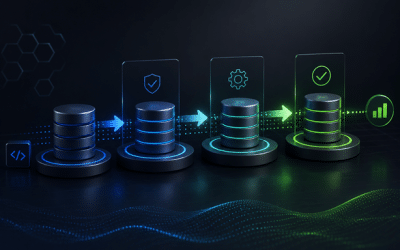
Database Deployment Guide: Process and Best Practices
Modern applications are constantly changing, and the databases behind them need to keep up. New features and updates can mean changes to schemas, tables, permissions, configurations, and other database components. Database deployment helps teams move those changes...

Benefits of Release Management for Large Enterprises
Release management, an integral part of the larger Product Lifecycle Management (PLM) process, refers to the process of planning, coordinating, and controlling the deployment of software changes into production environments. It involves the coordination of...
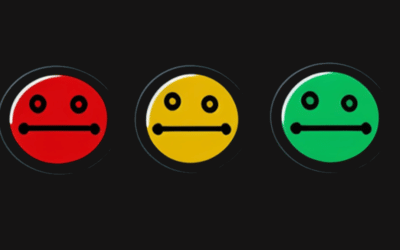
RAG Status: What It Is and Using It for Project Management
Effective Leadership requires effective tooling to drive successful outcomes. One tool they can use to monitor and measure progress is RAG status. RAG stands for Red, Amber, Green, and is a simple traffic light system used to communicate the current status of a...
IT Environments: What Are They and Which Do You Need?
The IT landscape is rapidly changing, with companies becoming increasingly distributed, cloud-driven, and agile. In order to minimize complexity and ensure operational efficiency, it’s critical to maintain full visibility and control over all your IT environments....
9 Planview Alternatives Compared: Features, Pros, and Cons
Planview is a popular enterprise project portfolio management (PPM) platform, but it isn't the right fit for every organization. Some teams need a simpler platform, lower costs, stronger Agile support, or better integrations with the tools they already use....
