
Solutions for IT & Test Environment Managers
Help IT and Test Environment Managers understand, govern and coordinate non production environments across applications, releases, data, infrastructure and delivery teams.
Environment Manager Objective
IT and Test Environment Managers help delivery teams access stable, available and fit for purpose environments across the software delivery lifecycle.
At enterprise scale, this becomes difficult when environments are shared across many teams, ownership is unclear, demand is constantly changing and environment information is spread across spreadsheets, tickets, wikis and emails.
Enov8 supports IT and Test Environment Managers by providing a shared control plane that connects environment inventory, bookings, demand, releases, deployments, data, incidents, ownership and readiness in one governed view.
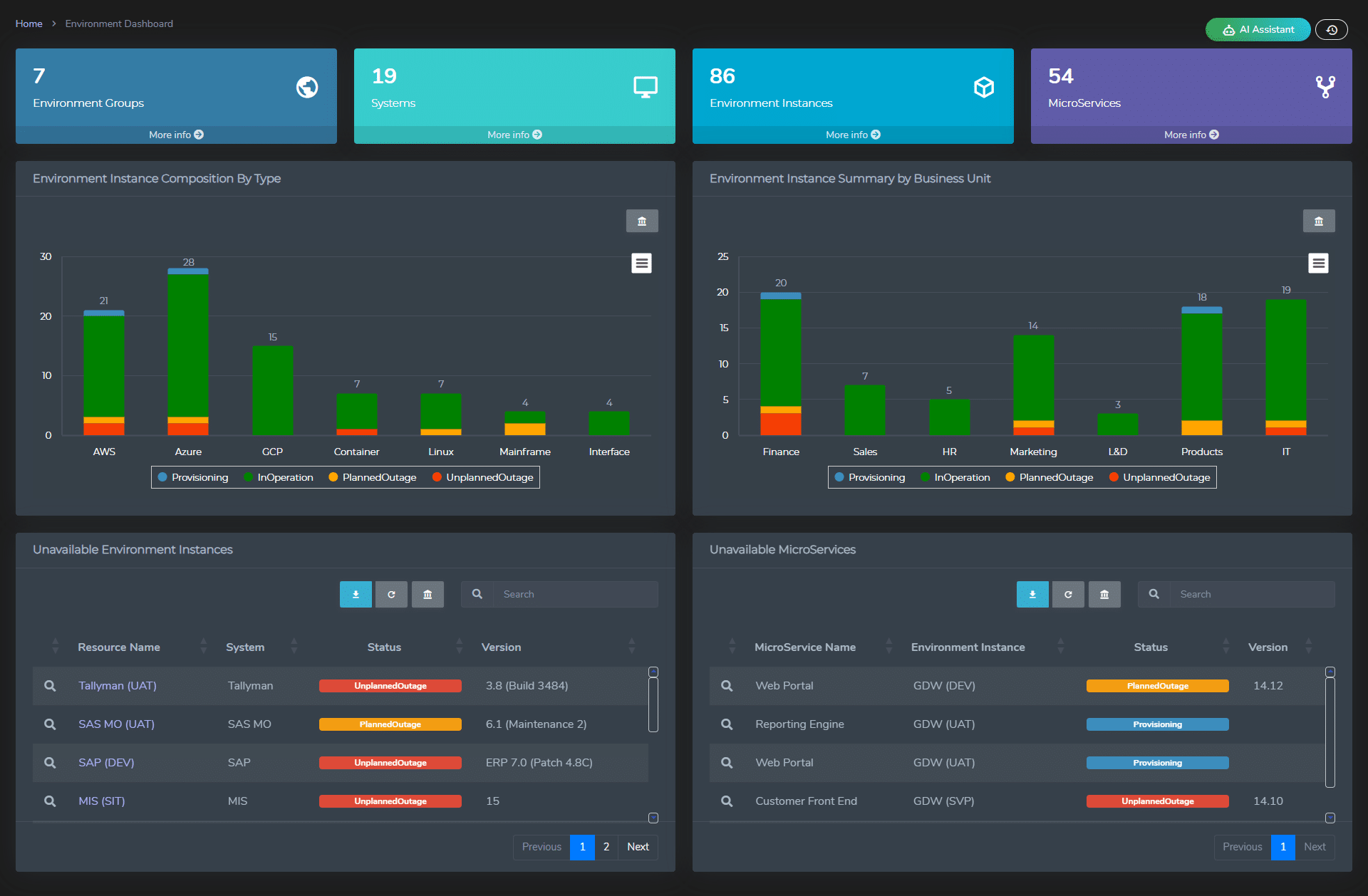
How Enov8 Helps Environment Managers
Enov8 Environment Manager helps IT and Test Environment Managers create a governed operating model for non production environments, connecting environment knowledge with delivery demand, release activity, data operations and operational readiness.
| Environment Management Need | How Enov8 Helps |
|---|---|
| Understand the environment landscape | Provides a connected view of environments, systems, instances, owners, usage, lifecycle status and relationships. |
| Coordinate environment demand | Helps teams manage bookings, reservations, contention, availability and competing delivery priorities. |
| Improve environment readiness | Connects environment status with deployments, incidents, data readiness, configuration and release activity. |
| Reduce manual coordination | Replaces fragmented spreadsheets, emails and manual chasing with governed visibility and shared workflow. |
| Support release and test planning | Links environment usage and readiness to project timelines, release windows, test cycles and delivery dependencies. |
| Improve operational control | Supports ownership, governance, lifecycle management, reporting and accountability across non production environments. |
Benefits for Environment Managers
Know what environments exist, who owns them and how they are used.
Manage bookings, demand, readiness, ownership and lifecycle status.
Align environments with releases, testing, data and delivery activity.
Report on availability, contention, usage, risk and operational readiness.
| Benefit | Description |
|---|---|
| Better environment visibility | Teams can understand environment ownership, usage, availability, status, dependencies and lifecycle position. |
| Reduced environment contention | Bookings, reservations and demand can be managed centrally to reduce conflicts across teams and projects. |
| Improved environment readiness | Environment status can be connected to deployments, incidents, data readiness, configuration and release plans. |
| Faster issue resolution | Clear ownership, status and dependency information helps teams identify environment issues and escalation paths faster. |
| Stronger release support | Environment availability and readiness can be aligned to release windows, test cycles and implementation planning. |
| Reduced manual administration | Environment Managers can reduce reliance on spreadsheets, emails, meetings and manual status chasing. |
| Improved governance and accountability | Environment ownership, usage, lifecycle and operational responsibilities can be managed through a shared control model. |
| Better executive reporting | Environment Management can report on demand, usage, contention, readiness, risk and operational performance. |