

Modern IT environments are made up of interconnected applications, services, databases, networks, and infrastructure. Understanding how those components depend on one another is essential for managing changes, troubleshooting issues, and planning for growth.
Application Dependency Mapping (ADM) provides that visibility by identifying and mapping the relationships across an IT environment. This guide explains how ADM works, its key benefits and use cases, and how organizations can use it to better manage complex IT environments.
What Is Application Dependency Mapping?
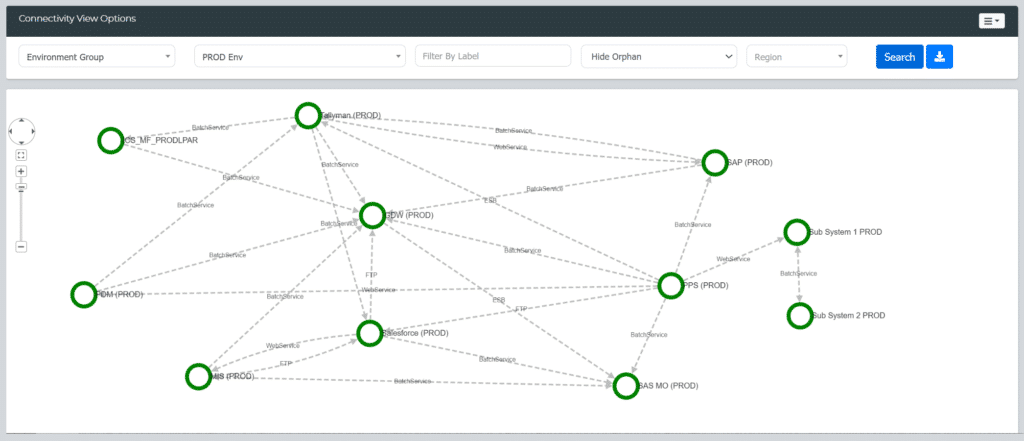
Application Dependency Mapping is the process of identifying and documenting the relationships and dependencies between applications, services, and their underlying hardware and network infrastructure. It creates a visual representation of how applications are interconnected, which is invaluable for both daily operations and strategic planning.
Example: Imagine a CRM system that relies on a database server and an email gateway to function. ADM would help document these relationships, ensuring any changes to the email gateway are assessed for potential impacts on the CRM system.
How Does Application Dependency Mapping Work?
Application Dependency Mapping works by identifying the components within an IT environment, understanding how they depend on one another, and visualizing those relationships. While the exact process varies by organization and tool, it generally involves three key steps.
1. Discover Applications and Infrastructure
Application Dependency Mapping begins by discovering the applications, services, databases, and infrastructure that make up your IT environment.
2. Identify and Map Dependencies
The next step is identifying how these components communicate and depend on one another, whether through APIs, network connections, shared databases, or supporting services.
Once these relationships have been identified, they are visualized in a dependency map that shows how applications interact across the environment. This provides IT teams with a clear understanding of which systems support critical business functions and how a change to one component could affect others.
3. Keep the Dependency Map Updated
Because modern IT environments are constantly evolving, dependency maps should be updated regularly. Automated discovery tools can help organizations maintain accurate, real-time visibility as new applications are deployed, infrastructure changes, and workloads move between on-premises and cloud environments.

Why Is Application Dependency Mapping Important?
ADM is vital for several reasons:
1. Reduce Risk
ADM helps teams identify critical dependencies and understand which applications, services, and infrastructure could be affected if a component fails or becomes unavailable.
2. Improve Change Management
Before making changes to applications or infrastructure, teams can use dependency maps to assess potential downstream impacts, helping reduce unexpected disruptions and downtime.
3. Optimize IT Resources
Dependency mapping can reveal redundant resources, bottlenecks, and inefficient dependencies, helping organizations make better use of their existing IT assets.
Key Components of Application Dependency Mapping
Application Dependency Mapping relies on several types of information to create an accurate view of how systems are connected. The key components typically include applications, dependencies, infrastructure, and data flows.
1. Applications
Identify the software applications within the environment and understand how they are configured.
2. Dependencies
Map the relationships between applications and the software, hardware, services, and network resources they rely on.
3. Infrastructure
Identify the physical, virtual, and cloud infrastructure that supports each application, including servers and network resources.
4. Data Flows
Understand how data moves between applications and other components to identify important connections, potential bottlenecks, and points of failure.

Benefits of Application Dependency Mapping
Application Dependency Mapping provides several operational and strategic benefits by giving IT teams clearer visibility into how systems depend on one another.
1. Improve Operational Efficiency
A clear understanding of application dependencies helps teams identify and resolve issues faster, reducing time spent troubleshooting interconnected systems.
2. Support Strategic Planning
Dependency maps can support infrastructure upgrades, cloud migrations, disaster recovery planning, and other initiatives by helping teams understand how changes may affect connected systems.
3. Reduce Costs
ADM can help identify underutilized resources, redundant infrastructure, and capacity planning opportunities that may reduce unnecessary IT spending.
Common Use Cases for Application Dependency Mapping
Application Dependency Mapping supports a wide range of IT initiatives beyond day-to-day operations. By providing visibility into how applications and infrastructure are connected, dependency maps can help teams plan changes, reduce risk, and troubleshoot issues more effectively.
1. Cloud Migrations
During cloud migrations, understanding application dependencies helps organizations determine which systems and workloads need to move together. This visibility can reduce the risk of disrupting critical business services during migration.
2. Change and Release Management
ADM also plays an important role in change and release management. Before updating an application or infrastructure component, teams can assess downstream dependencies to understand potential impacts and reduce the risk of unexpected outages.
3. Incident Response
Dependency maps can improve incident response by helping IT teams quickly identify affected applications when a server, database, or network component experiences an issue. Rather than troubleshooting individual systems in isolation, teams can trace dependencies to identify the root cause and restore services more efficiently.
Manual vs. Automated Application Dependency Mapping
Organizations can create dependency maps manually or use automated discovery tools. The right approach depends largely on the size and complexity of the IT environment and how frequently it changes.
Manual Application Dependency Mapping
Manual mapping may be suitable for smaller, relatively stable environments. However, it quickly becomes difficult to maintain as applications, infrastructure, and cloud resources grow and change, increasing the risk of outdated or incomplete documentation.
Automated Application Dependency Mapping
Automated Application Dependency Mapping continuously discovers and documents relationships across the IT environment, helping ensure dependency maps remain accurate as changes occur. This reduces the administrative burden on IT teams while providing more reliable information for change management, capacity planning, and incident response.
For organizations managing large or dynamic environments, automated dependency mapping provides greater visibility, improves decision-making, and helps reduce the risks associated with outdated or incomplete documentation.
Tools and Technologies
Several tools can aid in ADM, including the Enov8 Environment & Release Manager. This tool provides features that automate and simplify the creation of application dependency maps, offering clear visibility into complex IT environments. By integrating such tools, organizations can maintain accurate and up-to-date dependency maps, essential for effective IT management.
The Importance of ADM in Application Portfolio Management (APM) and IT Environment Management
ADM’s Role in APM
ADM is not just a technical necessity; it’s a strategic asset in Application Portfolio Management (APM). By providing a clear map of application dependencies, ADM enables organizations to make informed decisions about application maintenance, modernization, and rationalization.
It helps determine which applications are critical to business processes, which are outdated and need replacement, and how changes within the portfolio might impact business operations.
This strategic alignment with business goals ensures that IT investments contribute directly to business outcomes, enhancing ROI and compliance.
ADM’s Contribution to IT Environment Management
In the realm of IT & Test Environment Management, ADM plays a crucial role by mapping applications to their respective hardware and network infrastructures.
This mapping is essential for effective capacity planning, performance monitoring, and incident management.
By understanding how applications interact with the physical and virtual environments, IT teams can optimize resource allocation, plan for scalability, and ensure high availability and disaster recovery more effectively.
ADM also aids in root cause analysis during outages, helping to quickly identify and address the impacted services.
ADM as a Bridge between Platforms, Business, and SDLC
ADM can also be leveraged to connect platforms directly to business outcomes and the Software Development Life Cycle (SDLC). By mapping out how specific applications and platforms support business functions, organizations can prioritize development and maintenance efforts according to business needs.
This ensures that IT development aligns with strategic business objectives, improving both development efficiency and project outcomes.
In environments where continuous integration/continuous deployment (CI/CD) practices are in place, ADM provides the necessary visibility to manage these complex interactions and dependencies, thus supporting a more agile and responsive SDLC.
Challenges in Application Dependency Mapping
Application Dependency Mapping can provide valuable visibility, but maintaining an accurate picture of a complex IT environment comes with challenges. Organizations commonly need to address complexity, data accuracy, and scalability.
1. Managing Complex IT Environments
Modern IT environments can include interconnected applications, services, cloud resources, databases, and infrastructure. As the number of components and relationships grows, accurately mapping every dependency becomes more difficult.
2. Maintaining Data Accuracy
Dependency maps need to reflect the current state of the IT environment to remain useful. Frequent application deployments, infrastructure changes, and cloud migrations can quickly make manually maintained maps outdated.
3. Scaling Dependency Mapping
As organizations grow, so does the number of applications and dependencies that need to be tracked. Without automated discovery and mapping tools, maintaining accurate dependency information at scale can become increasingly difficult.
Best Practices in Application Dependency Mapping
Effective Application Dependency Mapping requires more than creating a map once. Organizations should keep dependency information current, involve the right stakeholders, and use automation where possible to maintain accurate and useful maps.
1. Keep Dependency Maps Updated
Regularly update dependency maps to reflect changes to applications, infrastructure, services, and cloud environments. Outdated information can lead to incorrect assumptions when planning changes or troubleshooting issues.
2. Involve Relevant Stakeholders
Include application owners, infrastructure teams, developers, and other relevant stakeholders in the mapping process. Their input can help identify dependencies and validate the accuracy of the information collected.
3. Use Automated Discovery Tools
Leverage automated tools to discover and maintain application dependencies as the IT environment changes. Automation can reduce manual effort while improving the accuracy and scalability of dependency mapping.
Conclusion
Application Dependency Mapping is a critical process that supports numerous IT management and governance activities.
By understanding and implementing ADM effectively, organizations can significantly improve their IT operations, enhance risk management, and optimize resource utilization.
As IT environments continue to evolve, ADM remains a foundational practice that provides clarity and control in a complex digital landscape.
