

Reducing Storage Costs with Tiny Databases
OCT, 2023
by Andrew Walker.
Author Andrew Walker
Andrew Walker is a software architect with 10+ years of experience. Andrew is passionate about his craft, and he loves using his skills to design enterprise solutions for Enov8, in the areas of IT Environments, Release & Data Management.
In today’s data-driven landscape, the effective management of data storage in non-production environments holds unprecedented significance. However, the escalating costs associated with data storage cannot be overlooked. In this article, we will delve deep into the strategies and considerations that organizations can employ to optimize storage in these lower environments without incurring exorbitant expenses.
Enov8 Test Data Manager
*aka ‘Data Compliance Suite’
The Data Securitization and Test Data Management platform. DevSecOps your Test Data & Privacy Risks.
Understanding Lower Environments
Lower environments, comprising development, testing, and staging, are foundational components in the software development lifecycle. These environments serve as crucibles for ensuring that software applications function flawlessly post-deployment. Nevertheless, the intricacies of data management within these lower environments present formidable challenges, particularly in the realm of storage cost optimization.
The Cost Implications
The costs associated with data storage in lower environments can burgeon exponentially if left unchecked. Visualize the scenario wherein redundant data is stored across multiple testing environments or where obsolete data that serves no functional purpose continues to occupy valuable storage resources. The resulting financial burden can be staggering. For instance, consider a hypothetical scenario in which an organization’s production data experiences an annual growth rate of 10%. Without proactive optimization measures, the cascading effect on non-production environments could translate into an exponential surge in storage costs.
Major Contributors to High Storage Costs
Several factors act as catalysts, inflating storage costs within lower environments:
- Data Duplication: The practice of maintaining multiple copies of identical data across different lower environments, needlessly consuming storage capacity.
- Lack of Data Lifecycle Management: The absence of a systematic approach to oversee the entire lifecycle of data, from its creation to eventual deletion, contributes to storage inefficiency.
- Infrequent Data Purging: Retaining obsolete or irrelevant data beyond its useful lifespan, failing to systematically purge data that should no longer be retained.
- Over-provisioning: The over-allocation of storage resources beyond what is truly necessary for the operations within these lower environments.

Strategies to Reduce Storage Costs
a. Data Subsetting
Data subsetting is a prudent practice that involves the utilization of smaller, yet still pertinent, datasets tailored for specific testing scenarios. Instead of duplicating and storing the entire production database within lower environments, organizations can meticulously extract and retain only a subset of data that serves the precise testing requirements, thereby conserving valuable storage space.
b. Database Virtualization
Database virtualization represents an innovative approach whereby virtual representations of databases are established within non-production environments. Instead of housing full-fledged copies of databases, this approach advocates the maintenance of lightweight versions that fulfill the same functional purposes. This not only leads to significant savings in storage space but also enhances data agility and flexibility.
c. Governance and Housekeeping
Data governance assumes a central role, transcending mere compliance concerns and extending into the realm of operational efficiency. Robust governance policies, when enacted, ensure that data storage remains perpetually optimized. Regular housekeeping activities, including scheduled data purges and archiving of historical data, act as guardians, ensuring that only relevant and current data occupies precious storage resources.
The Role of Automation in Storage Management
In an era where operational efficiency is paramount, automation emerges as the indisputable champion. The automation of data lifecycle management processes, particularly those associated with subsetting, virtualization, and governance, empowers organizations to secure storage optimization. Automation not only contributes to cost reduction but also streamlines data management, making data readily available whenever needed.
Data Privacy and Compliance
In the contemporary landscape, characterized by stringent regulations like GDPR, PCI, and HIPAA, data privacy stands as an imperative concern. This is particularly significant within lower environments, where data is frequently accessed and manipulated during the development and testing phases. Thus, it is incumbent upon organizations to ensure that sensitive data is meticulously masked or anonymized. This dual-pronged approach not only maintains regulatory compliance but also fosters trust among stakeholders.
Conclusion
The management of storage costs within lower environments necessitates a delicate equilibrium between operational efficiency and effectiveness. While the availability of sufficient data for testing and development remains non-negotiable, it is equally imperative to uphold the principles of storage optimization. By prioritizing and implementing strategies such as data subsetting, database virtualization, and the establishment of robust governance frameworks, organizations can successfully strike this balance. In doing so, they ensure seamless operations without succumbing to unnecessary expenses, thereby fortifying their competitive edge in today’s data-driven landscape.
Relevant Articles
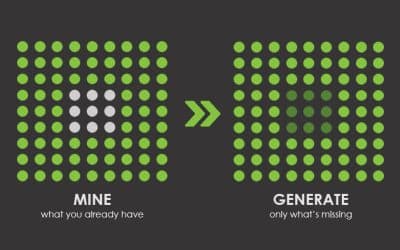
Why Generate Everything? Generate Only What’s Missing
There's a quiet assumption baked into a lot of synthetic data strategies: if you need test data, you generate it. All of it, from scratch, every time. It feels like the modern, AI-powered answer to test data. But it's often the slow, expensive answer to a problem...

MongoDB Data Masking: Benefits, Challenges, and Best Practices
MongoDB powers many modern applications, from customer-facing platforms to analytics systems and cloud-native services. As organizations store increasing amounts of customer, employee, financial, and operational data within MongoDB, they must protect that information...
Test Data Management for Salesforce: A Practical Guide
Salesforce environments contain some of an organization's most valuable information, including customer records, sales opportunities, support cases, financial information, and business process data. While teams need realistic data for development, testing, training,...

What is a QA Environment? A Beginners Guide
Software development is a complex process that involves multiple stages and teams working together to create high-quality software products. One critical aspect of software development is testing, which helps ensure that the software functions correctly and meets the...

What Is Privacy by Design? 7 Principles, Benefits, and GDPR
Millions of dollars are spent each year on data security and privacy initiatives, yet organizations continue to face breaches, unauthorized access, and growing compliance challenges. Rather than treating privacy as an afterthought, many organizations are turning to...

Best DataOps Tools: 8 Platforms Worth Evaluating in 2026
Choosing a DataOps tool has never been harder. The market now includes everything from pipeline orchestration platforms and observability tools to governance solutions and test data management software. While all of these products support DataOps initiatives, they...