
- Catalyses governance and transparency of your complete IT fabric
- Promotes metric stewardship; allowing resilience and reliability to be measured
- Displays risks & failure impact; allowing for planning and management of failover practices
Relevant Articles

What is Data Friction? A Detailed Explanation
Test Data Management (TDM) refers to the processes and strategies used to manage the data used in software testing. Effective TDM practices are essential to ensure that software is thoroughly tested and that testing is performed efficiently, especially when...

Data Masking in GCP: An Introductory Guide
Modern organizations rely heavily on cloud platforms to store, process, and analyze data. Google Cloud Platform (GCP) makes it easy to scale analytics workloads, run machine learning models, and support distributed development teams. But the datasets powering these...

A Data Loss Prevention Security Checklist for Enterprise
Companies today are collecting more data than ever and using analytics to influence everything from sales and marketing to research and development. In fact, data is now one of the most valuable assets that a company can own. Yet while data is more important...

Enterprise Architecture Principles: 13 for Resilience
Modern enterprises operate in environments defined by constant change. Cloud adoption, regulatory pressure, cybersecurity threats, distributed teams, and accelerating release cycles all increase the complexity of the IT landscape. In this environment, resilience is no...
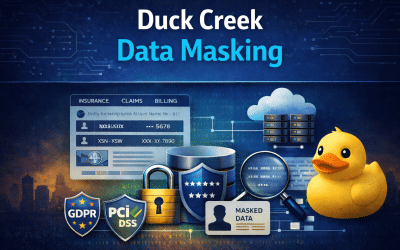
Duck Creek Data Masking in Depth: A Guide
Insurance platforms are data-heavy by design. Customer identities, policy records, payment details, underwriting notes, claims histories. In a Duck Creek ecosystem, that data powers critical business processes across policy, billing, and claims. It also creates...

What is a Microservice Catalog? A Detailed Explanation
Microservices have revolutionized the way modern software systems are designed and developed. Breaking down complex applications into smaller, independently deployable services brings numerous benefits in terms of scalability, flexibility, and maintainability....

The unified platform for modern IT delivery. From strategic planning to automated execution, Enov8 connects your applications, environments, data, and releases.


© 2026 Enov8. All rights reserved.