

Standard Operating Procedures (SOPs), aka Runsheets, are an important part of any organization’s technology and management of the IT & Test Environments. SOPs provide a framework for consistent and efficient operations, while also reducing risk and achieving cost savings.
This paper will discuss the benefits and challenges of implementing SOPs in the technology & management of the IT & Test Environments.
Overview of Standard Operating Procedures
Definition of Standard Operating Procedures (SOPs)
Standard Operating Procedures (SOPs) are a set of written instructions that document the steps required to complete a task or process. SOPs provide a consistent approach to completing tasks and processes, while also reducing risk and achieving cost savings.
SOPs are used in many industries, including technology & management of the IT & Test Environments.

The Need for SOPs in Technology & in the Management of the IT & Test Environments
Standard Operating Procedures (SOPs) are a set of written instructions that document the steps required to complete a task or process. SOPs provide a consistent approach to completing tasks and processes, while also reducing risk and achieving cost savings.
SOPs are used in many industries, including technology & management of the IT & Test Environments.
Benefits of SOPs
Standard Operating Procedures (SOPs) provide a number of benefits when implemented in the technology & management of the IT & Test Environments. These benefits include:
1. Improved Efficiency and Productivity
SOPs provide a consistent approach to completing tasks and processes, which can lead to improved efficiency and productivity. By following SOPs, employees can complete tasks more quickly and accurately, resulting in increased efficiency and productivity.
2. Reduced Risk and Cost Savings
SOPs provide a framework for consistent and efficient operations, while also reducing risk and achieving cost savings.
By following SOPs, organizations can reduce the risk of errors and mistakes, which can lead to cost savings. Additionally, SOPs can help ensure compliance with industry regulations and standards.
3. Improved Quality Control and Compliance
SOPs provide a framework for consistent and efficient operations, while also reducing risk and achieving cost savings.
By following SOPs, organizations can reduce the risk of errors and mistakes, which can lead to cost savings. Additionally, SOPs can help ensure compliance with industry regulations and standards.
4. Increased Visibility and Accountability
SOPs provide a framework for consistent and efficient operations, while also increasing visibility and accountability. By following SOPs, organizations can ensure that tasks are completed correctly and on time, while also providing a record of who completed the task.
This increased visibility and accountability can help ensure that tasks are completed correctly and on time.
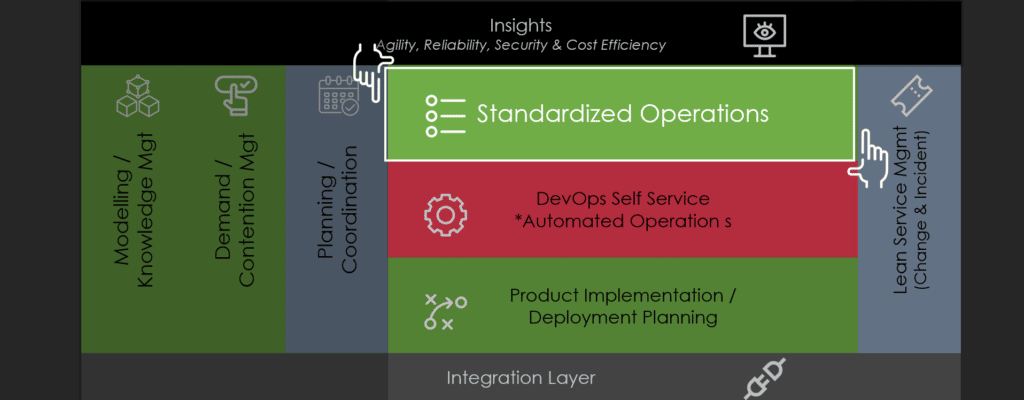
Challenges of Implementing SOPs
Standard Operating Procedures (SOPs) provide a number of benefits when implemented in the technology & management of the IT & Test Environments. However, there are also a number of challenges associated with implementing SOPs. These challenges include:
1. Time and Resources Required to Develop SOPs
Developing SOPs can be a time-consuming and resource-intensive process. Organizations must dedicate time and resources to developing SOPs that are comprehensive, accurate, and up-to-date.
Additionally, organizations must ensure that SOPs are regularly updated as technology changes.
2. Difficulty in Ensuring Adherence to SOPs
Once SOPs are developed, organizations must ensure that employees adhere to them. This can be difficult, as employees may not be familiar with the SOPs or may not understand the importance of following them.
Additionally, organizations must ensure that SOPs are regularly updated as technology changes.
3. Difficulty in Updating SOPs as Technology Changes
As technology changes, organizations must ensure that SOPs are regularly updated. This can be difficult, as organizations must dedicate time and resources to developing new or updated SOPs. Additionally, organizations must ensure that employees are trained on new or updated SOPs.
4. Difficulty in Training Employees on New or Updated SOPs
Once SOPs are developed, organizations must ensure that employees are trained on them. This can be difficult, as employees may not be familiar with the SOPs or may not understand the importance of following them.
Additionally, organizations must ensure that employees are regularly trained on new or updated SOPs as technology changes.
Example of a SOP / Runsheet
In Test Environments Management, a good use of a Standard Operating Procedure would be a Test Environment Shakedown.
And the Runsheet might look a bit like this:
Name: CRM Test Instance Shakedown
- Select the CRM Test Instance required e.g., UAT
- Check System Instance is Available by Login
- Check Test Users have Access
> Refer to the Booking Request for the specifics of users. - Check Test Data Loaded
> Refer to the Booking Request for the specifics of data. - Test Instance is Functional by running an E2E Transaction
> Use: CRM weekly call report. - Take a “snapshot” / backup of the instance
> Note: This allows us to rollback/restore during the test cycle. - Send out “shakedown” notification of success to the stakeholder.
- If good, tell the Test Team they can commence the QA cycle.
Simplify your SOP objectives via a Runsheet Management Tool
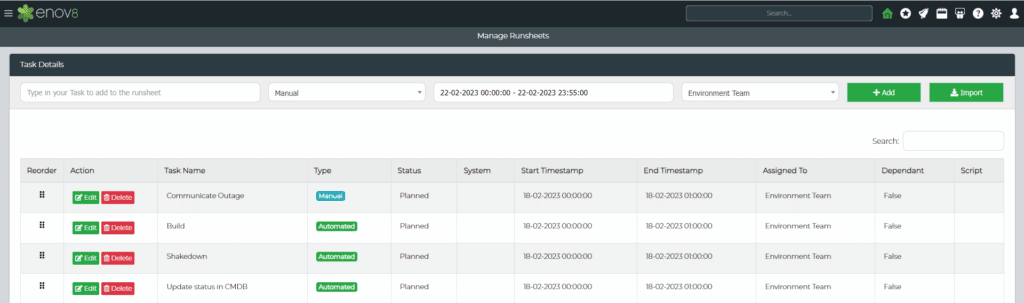
A tool like Enov8 Environment Manager, with inbuilt Runsheet Management capability, can help simplify the process of implementing SOPs in technology & management of the IT Environments.
Whether the tasks are manual or automated, the Enov8 solution provides a centralized platform for creating, managing, and tracking SOPs in real time. Additionally, this tool can help ensure that SOPs are regularly audited and updated so they never get outdated.
Enov8 Environment Manager, Runsheet: Screenshot
Conclusion
Standard Operating Procedures (SOPs) provide a number of benefits when implemented in the technology & management of the IT & Test Environments.
These benefits include improved efficiency and productivity, reduced risk and cost savings, improved quality control and compliance, and increased visibility and accountability.
However, there are also a number of challenges associated with implementing SOPs, including the time and resources required to develop SOPs, difficulty in ensuring adherence to SOPs, difficulty in updating SOPs as technology changes, and difficulty in training employees on new or updated SOPs.
A tool like Enov8 Environment Manager can help simplify the process of implementing SOPs in technology & management of the IT Environments.
Other Reading
Enjoy what you read? Here are a few more articles that you might find interesting.
Enov8 Blog: Test Environment Management Explained.
Enov8 Blog: Test Environment Planning & Coordination
Enov8 Blog: Test Environment Management Modelling

Author Andrew Walker
Andrew Walker is a software architect with 10+ years of experience. Andrew is passionate about his craft, and he loves using his skills to design enterprise solutions for Enov8 in the areas of IT Environments, Release & Data Management.