
Blog
Stay apprised of our industry-leading research and insights.

5 Key Reasons You Need Enterprise Configuration Management
Preamble Software is buggy. It’s a bold claim, I know. Sarcasm aside, the battle to keep your applications up and running is ongoing. Wouldn’t it be nice if you had a way to eliminate an entire class of bugs from your application? Enterprise configuration management...

5 Customer-Focused Cloud Metrics for Value-Based Practices
Preamble These days, deploying our services to the cloud just makes sense. Deploying to the cloud means you’re letting someone else handle low-level infrastructure costs, which gives us incredible flexibility. And with such flexibility comes a potentially...

11 DevOps Anti-Patterns to Avoid for Better Team Efficiency
It's the normal case with software buzzwords that people focus so much on what something is that they forget what it is not. DevOps is no exception. To truly embrace DevOps and cherish what it is, it's important to comprehend what it isn't. A plethora...
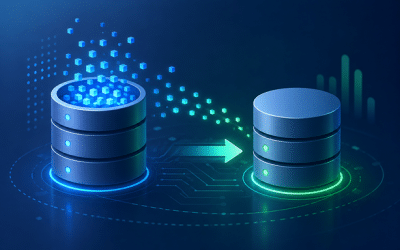
Database Refresh: What It Is, How It Works, and Best Practices
Development and testing teams need current, reliable data. But over time, non-production databases can fall out of sync with production. A database refresh brings them up to date with a newer copy of production data. But it’s not as simple as copying a database. Teams...
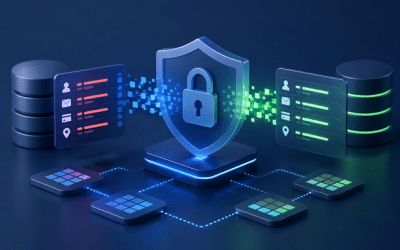
Delphix Data Masking: What It Is and How It All Works
Teams need realistic data for development and testing, but production data can create security and compliance risks in non-production environments. Masking replaces sensitive information with safer, usable alternatives. Perforce Delphix Continuous Compliance supports...

Why Cloud Server Tagging Strategies Are Important: A Guide
Preamble A key part of Enterprise IT Intelligence is understanding your cloud resources. And where better to start than using the “elegant” concept of Tagging? A concept used across the various cloud and infrastructure management platforms. The following is an article...

Beyond Cloud: Embracing the Playbook for Better Operations
Spinning up an instance in AWS, Azure or Google Cloud takes minutes. Running the end-to-end platform that instance belongs to is another matter. Application tiers, data tiers, integrations and the relationships between them don't get simpler just because they now run...

Why Use Containers in Test Environments? 4 Major Benefits
Containers are nothing new. Depending on how you look at it, you can make a case for them being around at least since 1982. But since the introduction of Docker in 2013, they’ve enjoyed a surge of popularity. Why? In just a few years, containers have had a big...

Data Security at Scale: Using Worker Bees for Data Masking
Securing enterprise data is hard. Securing it at enterprise scale is harder still. Most organizations don't fall short on data masking because they lack tools. They fall short because the way they use those tools can't keep up with the number of systems that need...

Why Use Microservices? Benefits for Modern IT Environments
New technologies and new ways of doing things are continually impacting the way our IT Environments evolve and how we do things. One area of growing popularity is Microservices. Why Use Microservices? Why should you start using microservices? Why all the...

How Do Data Breaches Happen? Common Causes and Prevention
Preamble You’ve probably seen some recent articles asserting that the world’s most valuable resource is no longer oil—it’s data. New internet titans like Google, Amazon, Apple, Facebook, and Microsoft look unstoppable. In fact, these internet titans are listed as the...

Lower vs. Upper Environments: A Complete Comparison Guide
In the dynamic world of software development, where speed, precision, and quality are non-negotiable, the effective management of IT and test environments is the linchpin that determines the success of projects. Environments serve as the critical stages...

DevOps Red Flag Warnings: 5 Signs Your Initiative Is Failing
Ever since the Agile Manifesto was published in 2001, software development has never been the same. In a pre-agile world, software was released in monolithic packages every year or every two years. The agile approach to development prioritized faster, more...

Release Gates Explained: Types, Reviews, and Best Practices
Before starting this topic on the importance of Release Gates, let's first understand – what is a Release Gate? A Release Gate can be defined as a milestone or health indicator of a release at that very point in time. Milestones are like stones placed beside a road to...

Enterprise Architecture Governance: Definition & Components
Enterprise architecture rarely fails because of bad technology. It fails because of too many good decisions made in isolation. Modern enterprises operate across cloud platforms, SaaS tools, legacy systems, APIs, and data environments that evolve independently. This...
Post Implementation Reviews: What They Are and How to Do One
In today’s fast-paced business environment, the success of a project hinges not just on the effective execution but also on thorough post-completion analysis. This is where Post-Implementation Reviews (PIRs) come into play. They are a critical component of project...

Agile Release Train Smells: 5 Common SAFe Mistakes to Avoid
Whether your organization is starting an agile transformation now or is well on its way, there are always pitfalls. Scaled Agile Framework (SAFe) is a big leap for most organizations. After all, even if some of your development teams were already using agile...

Software Testing Anti-Patterns: 6 Common Mistakes to Avoid
Martin Fowler AntiPattern: “An antipattern is a solution that initially looks like an attractive road lined with flowers… but further on leads you into a maze filled with monsters.” Since the dawn of computers, we’ve always had to test software. Over the course of...

Environment Resilience: Tips for Hiring a Strong SRE Team
Taking on Site Reliability Engineering (SRE) is not an easy task. It doesn’t matter where you’re coming from. Some organizations have done a little DevOps and are trying to break into SRE. Others haven’t even taken that step and figure they should go all the way with...

SRE vs Disaster Recovery: Differences and How They Overlap
Site reliability engineering versus disaster recovery: Every company needs a disaster recovery plan. This is just a simple fact of life. Your company needs to know how to recover when something breaks, or you can’t get access to something you need. In larger, more...
Ready to Accelerate Your Delivery?
Let’s build your roadmap to success. Schedule a personalized consultation with our experts to identify your biggest opportunities for automation and efficiency.

Free 30-Minute Session
No cost, no commitment. Get personalized insights into your delivery challenges.

Tailored Recommendations
Our experts will analyze your specific use case and recommend the best approach.

Implementation Roadmap
Walk away with a clear plan to accelerate your delivery and reduce costs.