

Compliance management is a crucial responsibility for Chief Information Officers (CIOs) in today’s regulatory landscape. As a CIO, ensuring that a company’s software products and services comply with applicable regulations is of utmost importance.
This process can be complex and time-consuming due to the ever-evolving nature of regulations.
Major Regulations to Know About
As a CIO, you need to know the major regulations that apply to your industry. Here are the key regulations that may have an impact.
1. GDPR
The General Data Protection Regulation (GDPR) is a European Union law designed to protect the privacy of personal data. Understanding and implementing measures to ensure GDPR compliance is vital for safeguarding customer data and maintaining trust.
2. CCPA
The California Consumer Privacy Act (CCPA) is a law specific to California that provides consumers with greater control over their personal data. Therefore, CIOs at companies that operate in California or handle Californians’ data must navigate CCPA requirements.
3. ISO 9000
The International Organization for Standardization (ISO) 9000 series establishes requirements for quality management systems. Adhering to these standards allows CIOs to establish robust processes and controls to ensure that software products and services meet the expected quality standards.
4. PCI DSS
Likewise, the Payment Card Industry Data Security Standard (PCI DSS) comprises a set of security standards for organizations involved in processing credit card payments. For CIOs, PCI DSS compliance is crucial to protect cardholder data and keep payment systems secure.
5. CSA STAR
Also, the Cloud Security Alliance (CSA) Security, Trust, Assurance, and Risk (STAR) registry provides a valuable public database of cloud security controls. Leveraging the guidelines offered by CSA STAR assists CIOs in selecting secure and compliant cloud service providers.
6. HIPAA
The Health Insurance Portability and Accountability Act (HIPAA) is a U.S. law that focuses on safeguarding the privacy and security of health information. CIOs in healthcare organizations must comply with HIPAA to ensure the protection of patients’ sensitive medical data.
7. SOX
In addition, the Sarbanes-Oxley Act (SOX) places significant requirements on IT controls for publicly traded companies, particularly around the accuracy of financial data and the integrity of systems that support financial reporting. CIOs at public companies must work closely with finance and audit teams to ensure IT infrastructure meets SOX requirements.
8. EU AI Act
The EU AI Act establishes risk-based requirements for artificial intelligence systems, with high-risk applications — such as those used in hiring, credit scoring, or medical diagnostics — facing strict transparency and accountability obligations. As AI spreads into software products, EU AI Act compliance is fast becoming a core CIO responsibility.
9. SEC Cybersecurity Disclosure Rules
Furthermore, the SEC now requires public companies to report material cybersecurity incidents within four business days of determining that an incident is material. Consequently, breach response is now a board-level issue. CIOs need fast assessment and reporting processes well before an incident occurs.

Being aware of these key regulations and their implications is essential for CIOs, as compliance with these regulations directly impacts the security, privacy, and trustworthiness of the organization’s operations.
By staying informed and acting on these rules, CIOs keep the organization legally compliant and protect sensitive information.

The Importance of Compliance Management for a CIO
As a Chief Information Officer (CIO), compliance management carries significant advantages that directly impact the organization’s success and well-being. Let’s explore these advantages in more detail.
Risk Mitigation and Protection
Ensuring compliance with privacy and security regulations plays a vital role in mitigating the risks associated with data breaches, reputational damage, and legal consequences. With a proactive stance, CIOs can build strong safeguards for the organization and its stakeholders.
For example, encryption, access controls, and regular security audits reduce vulnerabilities. As a result, they lower the risk of breaches.
Furthermore, adherence to compliance standards enhances the organization’s ability to detect and respond to security incidents promptly, strengthening its overall security posture.
Building Trust and Enhancing Reputation
Compliance serves as a tangible demonstration of the organization’s commitment to protecting customer data and upholding privacy rights. By prioritizing compliance, CIOs contribute to fostering trust among customers, partners, and stakeholders.
Moreover, clear compliance practices reassure customers that the organization handles their data securely and with integrity. In turn, this instills confidence and strengthens the organization’s reputation as a reliable and trustworthy entity. A positive reputation built on compliance practices can lead to increased customer loyalty, stronger partnerships, and enhanced market competitiveness.
Cost Efficiency and Resource Allocation
Proactive compliance management offers substantial cost-saving benefits by preventing costly fines and penalties associated with regulatory non-compliance. By staying ahead of compliance requirements, CIOs can avoid the financial consequences that result from violations.
The allocation of resources towards compliance initiatives, including implementing necessary controls and conducting regular audits, is a strategic investment that helps safeguard the organization’s financial stability. By avoiding penalties, fines, and litigation, the organization can spend its money on innovation and growth instead.
Moreover, compliance management encourages operational efficiency and effectiveness by streamlining processes, enhancing data governance, and promoting best practices. It also helps standardize procedures, remove redundancy, and optimize workflows. In turn, productivity rises, and costs fall.
By recognizing the importance of compliance management, CIOs can effectively prioritize and allocate resources towards compliance initiatives, thereby mitigating risks, fostering trust, and ensuring long-term success for the organization.
A proactive compliance stance protects the organization and its stakeholders. Furthermore, it frees resources for innovation, growth, and the pursuit of strategic objectives.
Getting Started with Compliance Management
As a CIO, initiating effective compliance management involves a series of steps to ensure a comprehensive and proactive approach. Here’s a simplified breakdown of the key steps.
1. Understand Applicable Regulations
First, learn the regulations that apply to your industry, location, and operations. Stay updated on any changes or updates to these regulations to ensure ongoing compliance.
2. Assess Current Compliance Status
Evaluate your organization’s current compliance posture by conducting a thorough assessment. Identify any gaps or areas of improvement in your existing compliance processes and controls. Engage stakeholders, such as legal and security teams, to ensure a comprehensive evaluation.
3. Develop a Compliance Strategy
Create a well-defined compliance strategy that aligns with your organization’s goals and objectives. This strategy should outline specific plans and initiatives to achieve and maintain compliance with the relevant regulations.
Consider factors such as resource allocation, training programs, and technology investments to support your compliance efforts.
4. Implement Compliance Measures
Collaborate with cross-functional teams to effectively implement your compliance strategy. Establish robust processes, controls, and technologies to ensure adherence to regulatory requirements.
Leverage compliance management solutions, such as the Enov8 Platform, to guide and track compliance across your systems and data. These solutions provide invaluable tools for modeling and capturing key insights, including compliance-related information, to facilitate effective compliance management.
5. Continuously Monitor and Improve
Regularly monitor and review the effectiveness of your compliance program. Implement ongoing monitoring processes and periodic assessments to identify and address any compliance gaps.
Stay proactive in addressing evolving regulatory changes and emerging compliance risks by staying informed and adapting your compliance measures accordingly. Continuously seek opportunities for improvement and innovation in your compliance practices to ensure ongoing effectiveness.
By following these steps and leveraging appropriate compliance management solutions, you can establish a strong foundation for effective compliance management as a CIO. This approach helps you handle complex regulations while protecting data, building trust, and reducing risk.
Choosing a Compliance Management Solution
When selecting a compliance management solution, it is essential to consider various factors that contribute to its effectiveness and suitability for your organization’s needs.
Here are some additional considerations to keep in mind.
1. Comprehensive Coverage
A comprehensive compliance management solution should go beyond mere checklist-based compliance. It should provide the capability to model and capture key insights across your environments, release operations, and data itself.
Solutions like Enov8, for example, offer a holistic approach to compliance by allowing you to map and visualize your entire IT landscape, including applications, infrastructure, and dependencies.
This comprehensive view enables better understanding of the impact of compliance requirements on your systems and facilitates proactive compliance management.
2. Ease of Use
Look for a compliance management solution that is user-friendly and accessible to both technical and non-technical stakeholders within your organization. Likewise, intuitive interfaces and clear workflows help teams collaborate and adopt compliance processes.
For instance, solutions like Enov8 provide user-friendly interfaces and customizable workflows that streamline compliance activities, making it easier for stakeholders at all levels to engage effectively.
3. Scalability and Integration
In addition, choose a solution that can scale and adapt as your organization grows. Consider solutions that offer flexibility and support integration with your existing systems and processes.
This allows for seamless incorporation of compliance management into your organization’s overall IT operations. Enov8, for instance, provides scalable and configurable features that can accommodate the unique needs of your organization as it expands and changes over time.
4. Robust Reporting and Analytics
Effective compliance management requires comprehensive reporting and analytics capabilities. Also, a good solution should show your compliance status in real time, including strengths and gaps.
Look for solutions that offer customizable dashboards, automated reporting, and analytics tools to track and communicate compliance progress effectively.
With Enov8, you can generate customizable compliance reports, monitor compliance metrics, and gain valuable insights into your compliance posture, enabling informed decision-making and continuous improvement.
By considering these factors and leveraging solutions like Enov8, you can enhance your compliance management efforts. In particular, these solutions provide the necessary tools and capabilities to model and capture key insights across your environments, release operations, and data, ensuring comprehensive compliance coverage.
They also offer user-friendly interfaces, scalability, integration options, and robust reporting and analytics capabilities to streamline compliance activities and facilitate effective compliance management.
Ultimately, the right compliance management solution helps you navigate regulation with confidence.
Compliance Management is Critical
In conclusion, as a Chief Information Officer (CIO), compliance management holds significant importance in your multifaceted role. By prioritizing compliance and diligently following the steps outlined in this article, you can ensure that your organization meets the necessary regulatory requirements while effectively mitigating associated risks.
First, build a deep understanding of the changing regulatory landscape and the rules that apply to you.
Moreover, leveraging appropriate compliance management solutions plays a pivotal role in achieving effective compliance management.
For example, solutions like the Enov8 Platform offer invaluable capabilities for modeling and capturing key insights across your environments, release operations, and data. With Enov8, you can gain a comprehensive understanding of your entire IT landscape, including applications, infrastructure, and dependencies.
As a result, this holistic view helps you address compliance requirements early and build a culture of compliance.
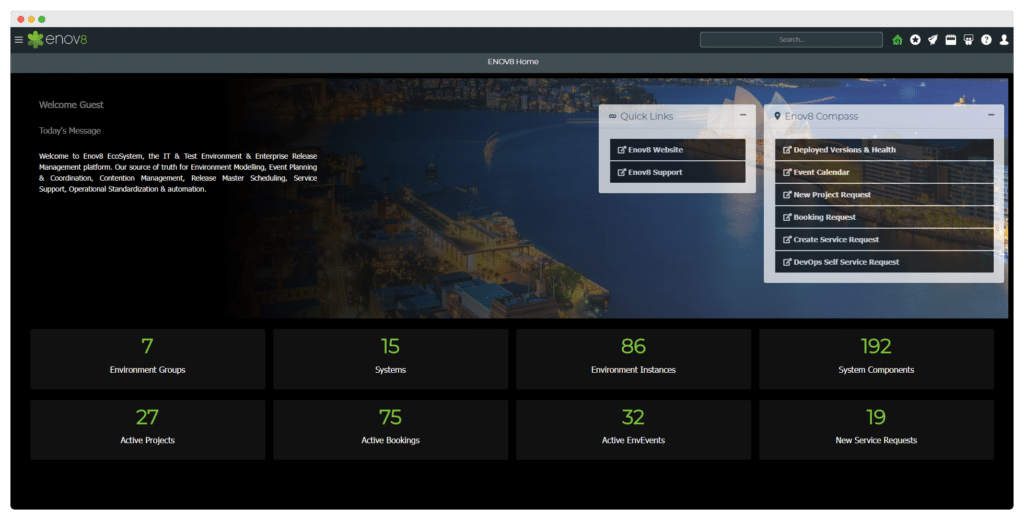
Furthermore, selecting a compliance management solution that is user-friendly and caters to both technical and non-technical stakeholders is crucial. The ease of use facilitates seamless collaboration and adoption across teams, ensuring efficient and effective compliance management efforts. Similarly, scalability and integration matter, so the solution can grow with your organization.
Additionally, robust reporting and analytics capabilities provided by compliance management solutions enable real-time insights into your organization’s compliance status. Customizable dashboards, automated reporting, and advanced analytics tools facilitate comprehensive tracking and communication of compliance progress.
Solutions like Enov8 empower you to generate customizable compliance reports, monitor key compliance metrics, and derive valuable insights to drive informed decision-making and continuous improvement.
As a CIO, embracing compliance management as an opportunity enables you to safeguard valuable data, foster trust among stakeholders, and drive the overall success of your organization in a regulatory environment.
By prioritizing compliance, leveraging suitable compliance management solutions such as the Enov8 Platform, and consistently staying informed about regulatory changes, you can navigate the regulatory landscape with confidence, ensuring the long-term compliance and success of your organization.

Author
Jane Temov is an IT Environments Evangelist at Enov8, specializing in IT and Test Environment Management, Test Data Management, Data Security, Disaster Recovery, Release Management, Service Resilience, Configuration Management, DevOps, and Infrastructure/Cloud Migration. Jane is passionate about helping organizations optimize their IT environments for maximum efficiency.