
Blog
Stay apprised of our industry-leading research and insights.

SAP Data Masking: A Detailed Guide to Protecting Your Data
SAP systems handle some of the most sensitive data in the enterprise: financial transactions, HR information, supplier records, customer profiles, operational details, and more. For that reason, copying production data into non-production systems without modification...

Software Deployment Tools: 13 Best Options for DevOps Teams
Software deployment tools are essential for modern enterprises looking to streamline their application delivery process. These tools help ensure that applications are delivered consistently, efficiently, and with minimal risk of errors. However, beyond individual...

7 Essential Tools to Help with Application Rationalization
Application rationalization is the process of identifying which applications an organization should keep, update, consolidate, or retire. Think of it as a financial adviser, but instead of your investment portfolio, it's your application portfolio. Most companies take...

Guidewire Data Masking: An Introductory Guide for Insurers
Testing is an essential part of maintaining a healthy Guidewire environment. But because Guidewire applications handle large volumes of personally identifiable information (PII), simply copying production data for testing or training isn't an option. This is where...

What Is Data Operations? A Complete Guide to DataOps
Businesses across the board are spinning their tires when it comes to data and analytics, with many of them failing to unlock maximum value from their investments. According to one study, 76% of companies face challenges around how they manage data. While...

SAP HANA Data Masking: A Complete Guide
Using production data makes development and testing much more effective, but it also introduces a challenge: How do you give teams realistic data without exposing sensitive information? SAP HANA data masking solves that problem. In this guide, you'll learn what it is,...

Top Data Masking Tools to Ensure Data Privacy & Security
As organizations collect, process, and replicate data across more systems than ever before, the risk of exposure increases dramatically. Sensitive information that's safely stored in production databases often becomes vulnerable when copied into test, training, or...

Databricks Data Masking: Best Practices, Techniques, and Tools
Organizations use Databricks to build data pipelines, power analytics, and develop machine learning and AI solutions on a unified lakehouse platform. Much of the data stored in Delta Lake tables includes personally identifiable information (PII), financial records,...

11 Key Benefits of Application Rationalization Explained
In most enterprises, the number of applications in use has grown far beyond what's practical to manage. And that's putting it mildly. Each department tends to adopt tools to meet its own needs, sometimes duplicating functionality that already exists elsewhere. Over...

Database Virtualization & Ephemeral Test Environments Guide
Introduction: Why This Matters Across every industry, enterprises are being asked to do more with less. Deliver digital services faster. Reduce costs. Strengthen compliance. And achieve all of this without compromising resilience. Yet despite significant investment in...
Enterprise Architecture Management (EAM): A Complete Guide
Organizations operate in an increasingly complex digital environment. Business leaders want to move quickly, innovate, and meet customer expectations, while IT leaders need to maintain stability, security, and scalability. This kind of organizational friction can be...
What Is Data-Driven Testing? A Complete Beginner’s Guide
Compared to about 100 years ago when I was a junior test engineer, software testing has evolved far beyond running a handful of manual test cases.

Test Data in Auditing: A Comprehensive Guide for Beginners
Test data plays an important role in the world of auditing, yet it is not always well understood. There's nuance here that's important to understand. When auditors need to assess whether financial systems, applications, or controls are working as intended,...
11 Essential Benefits of Application Portfolio Management
In digital‑first organizations, the application landscape is vast and constantly evolving. Departments add tools to meet immediate needs, legacy systems stick around for years, and new technologies emerge faster than they can be evaluated. It's like finding your...
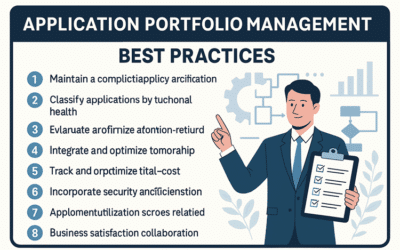
11 Essential Application Portfolio Management Best Practices
Managing an enterprise application portfolio is no small feat. Over time, even the most disciplined organizations can end up with dozens—or even hundreds—of applications scattered across departments, many of which overlap in functionality or have outlived their...
Data Masking in Salesforce: A Complete Introductory Guide
Salesforce is a powerhouse for managing customer relationships, and that means it often stores your most sensitive customer data. But not every Salesforce environment is equally secure. Developers, testers, and training teams often work in sandbox environments that...
Release Dashboards: How They Improve Visibility and Control
When software releases go wrong, it's rarely because someone dropped the ball. Usually, it's because no one had a clear picture of what was happening. Without visibility, things slip through the cracks. Deadlines get missed, bugs sneak in, and teams spend their time...
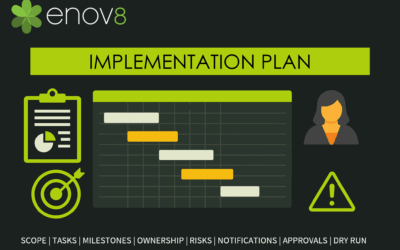
Implementation Planning: A Complete Guide for IT Leaders
Let's roll up our sleeves and talk about something every child grows up dreaming to do as an adult: implementation planning. I kid, of course, but implementation planning is a critical business activity that bears examination. Implementation planning is a...

Why Generate Everything? Generate Only What’s Missing
There's a quiet assumption baked into a lot of synthetic data strategies: if you need test data, you generate it. All of it, from scratch, every time. It feels like the modern, AI-powered answer to test data. But it's often the slow, expensive answer to a problem...

7 Top Test Data Generation Tools for QA & Development Teams
Generating the right test data is a critical challenge for QA and development teams. Without realistic, compliant, and well-managed data, testing can yield misleading results or miss crucial bugs. You don't want your customer sign-up to fail because it never...
Ready to Accelerate Your Delivery?
Let’s build your roadmap to success. Schedule a personalized consultation with our experts to identify your biggest opportunities for automation and efficiency.

Free 30-Minute Session
No cost, no commitment. Get personalized insights into your delivery challenges.

Tailored Recommendations
Our experts will analyze your specific use case and recommend the best approach.

Implementation Roadmap
Walk away with a clear plan to accelerate your delivery and reduce costs.